Own-Rooted Cabernet: The Global Reality
Updated: May 23
We’ve talked a lot about own-rooted vines, one-block, high-elevation wine.
Now, let’s talk about what that really means in the world of wine. For that, we need to look at what’s happening underground.
1. The Grafted Vine vs. The Real Deal
Almost every premium wine in the modern world comes from a grafted vine. That's just the truth.
The standard practice in a vineyard is to take a Cabernet Sauvignon vine and splice it onto a completely different rootstock—usually a wild American hybrid species. Growers do this because phylloxera — a microscopic root-feeding aphid — devastated European vineyards in the 19th century and remains a persistent viticultural threat today.
When a vine is own-rooted, the vine and root system are genetically identical from root tip to canopy, without grafting onto foreign rootstock. It’s one single plant from the deepest root tip to the highest leaf.
Rootstocks can influence vigor, water uptake, nutrient balance, and ripening behavior.
An own-rooted vine is directly plugged into the earth. Ungrafted grapevines are capable of developing remarkably deep root systems under the right soil and water conditions. When you drink an own-rooted wine, you’re tasting the purest, unmediated relationship between that specific soil and the grape. No middleman.
2. A Statistical Zero in the United States
If you think own-rooted Cabernet is common, it's time to reconsider. In the United States, finding an own-rooted block of Cabernet Sauvignon is like finding a needle in a burning haystack. Because phylloxera remains a constant threat across North American wine regions, standard viticulture dictates that you graft, or risk losing your entire multi-million-dollar investment.
Aside from a handful of isolated sandy-soil regions where phylloxera pressure is significantly reduced, virtually every commercial Cabernet Sauvignon vineyard in California, Napa, and the broader US uses rootstocks.
Owning an own-rooted block is rare; most growers steer clear of the risk. We’re not most growers.

3. The 1,500-Foot Thermal Belt
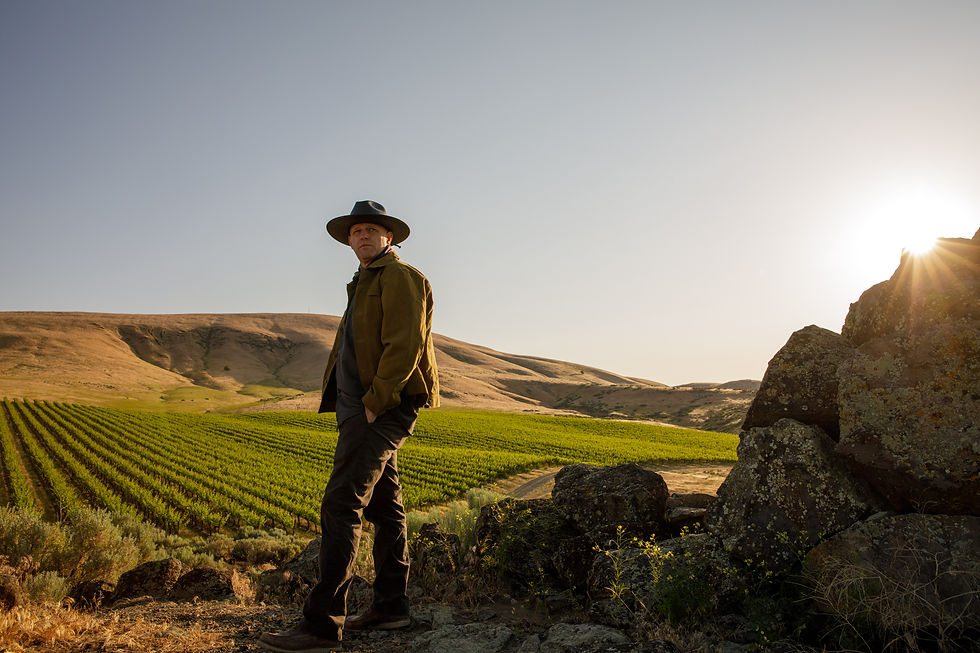
What 1,500-foot elevation buys us is a meteorological phenomenon called thermal inversion. Cold air is dense and heavy; it acts like water, rolling off the hillsides and draining straight down into the valley floor. While lower-elevation vineyards are more vulnerable to frost accumulation during the spring and autumn, our hillside slope sits safely in a warm thermal belt.
This elevation keeps the vines out of the freezing traps and extends the growing season, giving the grapes a slow, deliberate crawl to maturity rather than letting the sugars spike and the natural acidity burn off overnight.
But don’t think for a second these vines have it easy. Solar exposure is intense in the high-desert-like environment, not just because of altitude. It’s a lethal combination of latitude and dryness. Sitting right on the 46th parallel, our summer days are long, hammering the vineyard with up to 16 hours of pure daylight.
Combine that with the Cascade Mountain rain shadow - which steeply reduces any humidity, cloud cover, or coastal fog - and the sun hits these own-rooted vines like a laser beam. In response to environmental stress and intense sunlight exposure, the berries develop thicker skins and concentrated phenolic compounds. That’s where you get that massive structural backbone contributing to the wine’s dark color, tannic structure, and concentration
4. The Unicorn Bottle
Let’s stack it all up: A single, isolated vineyard block. 100% pure Cabernet Sauvignon - no blending varieties used to soften or reshape the vineyard’s natural profile.
Own-rooted, meaning it’s standing on its own two feet without grafting onto a different rootstock. Grown at a high elevation in a desert-like climate.
On a global scale, very few Cabernet vineyards combine these conditions simultaneously. It is an unusually uncommon viticultural setup for modern Cabernet Sauvignon

5. The Global Hunt
If you think you can easily find another bottle that pulls off this exact high-stakes gamble, think again.
Few regions globally pursue own-rooted Cabernet under similarly extreme growing conditions, you’d have to haul yourself halfway across the planet. You’d be looking at the extreme high-altitude vineyards of Salta, Argentina, or the bone-dry, jagged edges of the Atacama Desert in Chile’s Elqui Valley. Down there, they use pure mountain altitude to survive the heat and catch the sun.
Up here on our 1,500-foot hillside, we achieve similarly concentrated phenolic development through a different climatic mechanism - using long 16-hour northern days, a high-desert rain shadow, and a thermal inversion belt that defies the frost.
Very few regions operate within this combination of climatic extremes. If you aren't drinking from those remote Andean cliffs, or from this exact block right here, you’re hunting a ghost. We aren't just out-farming the vineyard down the road; we're sitting in a club so exclusive the rest of the wine world needs a passport just to look inside.
So when we say this vineyard is special, it's the truth.